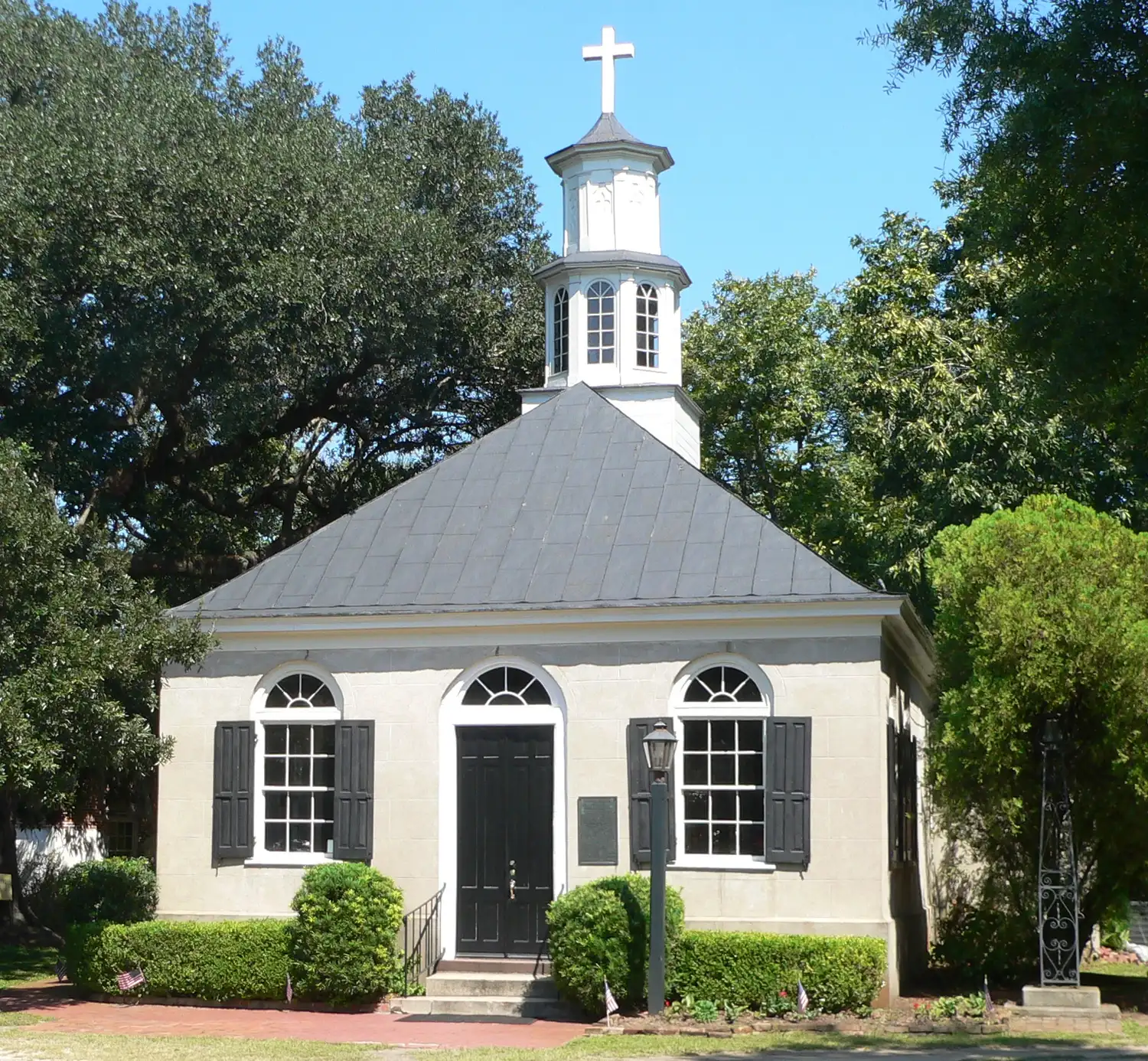
Settled in 1680 and incorporated Dec. 20, 1837, Mount Pleasant has 16 National Register listings, from the 1973 Old Village district to the USS Yorktown.
Last checked Oct. 16, 2026. History comes from the Town of Mount Pleasant’s Our History pages, written with its Historical Commission; National Register listings and dates from the National Park Service’s National Register data download (file of May 22, 2026). Questions: the town’s Historical Commission, through Planning, 843-884-1229.
Mount Pleasant began as plantation land and small waterfront villages across the harbor from Charleston, grew up on shipbuilding, rice milling and shrimping, and became one of South Carolina’s fastest-growing towns after the Cooper River bridges were built, the town says.
Who to call
- Historical Commission and the History Room: Planning, 843-884-1229, planning@tompsc.com
- Charles Pinckney National Historic Site: 843-577-0242
- Boone Hall Plantation: 843-884-4371
Timeline
| Date | What happened |
|---|---|
| Before 1680 | The land is home to the Sewee people. |
| July 6, 1680 | The first European settlers arrive under Capt. Florentia O’Sullivan, granted 2,340 acres. |
| 1696 | Fifty-one Congregationalist settlers arrive between the Wando River and Awendaw Creek. |
| 1706 | Christ Church Parish is created; a parish church goes up at Long Point Road and today’s U.S. 17 in 1708. |
| 1766 | Jonathan Scott lays out the village of Greenwich, with King, Queen and Pitt streets. |
| 1793 | Jonathan Lucas buys 471 acres on Haddrell’s Point, including the Greenwich Mill on Shem Creek. |
| 1803 | James Hibben buys Jacob Motte’s Mount Pleasant Plantation and has the village of Mount Pleasant platted. |
| Dec. 20, 1837 | Greenwich and Mount Pleasant merge and are incorporated by the S.C. General Assembly. |
| 1858 | The town grows to take in Hilliardsville, laid out in 1847. |
| Early 1900s | Shem Creek becomes the heart of a shrimping industry. |
| March 30, 1973 | The Mount Pleasant Historic District is listed on the National Register. |
| 1979 | The town creates its local Old Village Historic District. |
All from the town’s Colonial Era and Antebellum Era pages and its history overview.
The Old Village
The Mount Pleasant Historic District, listed March 30, 1973, covers about 30 blocks bounded by Charleston Harbor, Shem Creek, Royall Avenue and McCants Drive. Its oldest surviving house dates from 1759. Because the district was listed so early, its paperwork names only 10 properties, nine buildings and a cemetery, though many more contribute to it, the town explains.
In 1979 the town drew a larger, 37-block Old Village Historic District that takes in the National Register district; changes to buildings there go before the town’s Historic District Preservation Commission. The streets still carry the colonial names Jonathan Scott gave them: King, Queen and Pitt.
National Register listings
The National Park Service lists these entries under Mount Pleasant, with the date each was listed. Several are outside the town limits but carry a Mount Pleasant address; the archaeological sites have restricted addresses and are not open to visitors.
| Listing | Where | Listed |
|---|---|---|
| Auld Mound | Address restricted | Oct. 15, 1970 |
| Buzzard’s Island Site | Address restricted | Oct. 15, 1970 |
| Old Courthouse (now the G.M. Darby Building) | King Street | May 6, 1971 |
| Christ Church | U.S. 17 near Long Point Road | Nov. 27, 1972 |
| Mount Pleasant Historic District | Old Village | March 30, 1973 |
| Snee Farm, Charles Pinckney National Historic Site | 1254 Long Point Road | April 13, 1973; boundary increase Oct. 10, 2021 |
| Paul Pritchard Shipyard | Address restricted | Sept. 17, 1974 |
| Oakland Plantation House | U.S. 17, north of town | July 13, 1977 |
| USS Yorktown (CV-10) | Patriots Point | Nov. 10, 1982 |
| USS Laffey | Patriots Point | April 12, 1983 |
| Slave Street, Smokehouse and Allee, Boone Hall Plantation | Off U.S. 17 | July 14, 1983 |
| Long Point Plantation | Address restricted | March 20, 1986 |
| Boone Hall Plantation House and Historic Landscape (boundary increase) | Long Point Road | Jan. 21, 1994 |
| Lucas Family Cemetery | Ellen Drive | May 18, 1998 |
| Cook’s Old Field Cemetery | North of Rifle Range Road | May 9, 2003 |
| Phillips Community Historic District | Along S.C. 41 | Sept. 7, 2023 |
Snee Farm, the USS Yorktown and the USS Laffey are also National Historic Landmarks, Snee Farm since 1974 and both ships since 1986. The newest listing, the Phillips Community Historic District, runs along S.C. 41, roughly bounded by Horlbeck Creek, Dunes West and Park West.
Places to visit
- Charles Pinckney National Historic Site, 1254 Long Point Road: Snee Farm, the plantation of founding father Charles Pinckney, run by the National Park Service. The historic house is the visitor center; the grounds, trails and restrooms are open 9 a.m. to 4:30 p.m. even when it is closed, the park says. 843-577-0242.
- Patriots Point Naval and Maritime Museum, 40 Patriots Point Road: the USS Yorktown and USS Laffey, 27 aircraft, the Vietnam Experience and the Congressional Medal of Honor Museum. It was open 10 a.m. to 5 p.m. on Oct. 16, according to Patriots Point.
- Boone Hall Plantation, 1235 Long Point Road: open 9 a.m. to 5 p.m. Monday to Saturday and noon to 5 p.m. Sunday, according to Boone Hall. 843-884-4371.
- Sweetgrass Basket Pavilion, Memorial Waterfront Park: an open-air exhibit on the Lowcountry sweetgrass basket tradition, a stop on the Gullah Geechee Cultural Heritage Corridor, where basket makers demonstrate their craft, the town says.
- Historical markers. The town’s Historical Commission has placed markers across town, and the Old Village Historic District Wellness Walk links 20 of them, starting near Moultrie Middle School on Coleman Boulevard, where parking is free. The marker list and map are on the historical markers page.
- The History Room. The town’s Mount Pleasant Collection can be seen by appointment through Planning, 843-884-1229.
The two National Register cemeteries are the Lucas Family Cemetery on Ellen Drive and Cook’s Old Field Cemetery north of Rifle Range Road, where James Hibben, who had the village of Mount Pleasant platted and died in 1835, is buried.
What this means for you
- Living in the Old Village means exterior changes go through the town’s historic preservation review first.
- The Pinckney site’s grounds and trails stay open 9 a.m. to 4:30 p.m. even when the house is closed.
- The town’s Quick Fact Friday emails and Passport Program are free ways to learn the history.
Related guides: population and growth, parks and trails and things to do this month.
Frequently asked questions
When was Mount Pleasant, South Carolina, founded?
The first European settlers arrived July 6, 1680, under Capt. Florentia O’Sullivan, on land first inhabited by the Sewee people. The town was incorporated Dec. 20, 1837, when the villages of Greenwich and Mount Pleasant merged.
What is the Old Village in Mount Pleasant?
The town’s historic core. Its center was listed on the National Register of Historic Places as the Mount Pleasant Historic District on March 30, 1973, and the town created a 37-block local Old Village Historic District in 1979.
What National Register sites are in Mount Pleasant?
The National Park Service lists 16 properties under Mount Pleasant, including Christ Church (1972), the Mount Pleasant Historic District (1973), Snee Farm (1973), the USS Yorktown (1982), the USS Laffey (1983) and the Phillips Community Historic District (2023).
Where can I research Mount Pleasant history?
The town’s History Room holds the Mount Pleasant Collection; book a visit through Planning at 843-884-1229 or planning@tompsc.com.
Have your say